

Safety improvements have been in the works for several years for Ralph David Abernathy Boulevard in Atlanta’s West End.
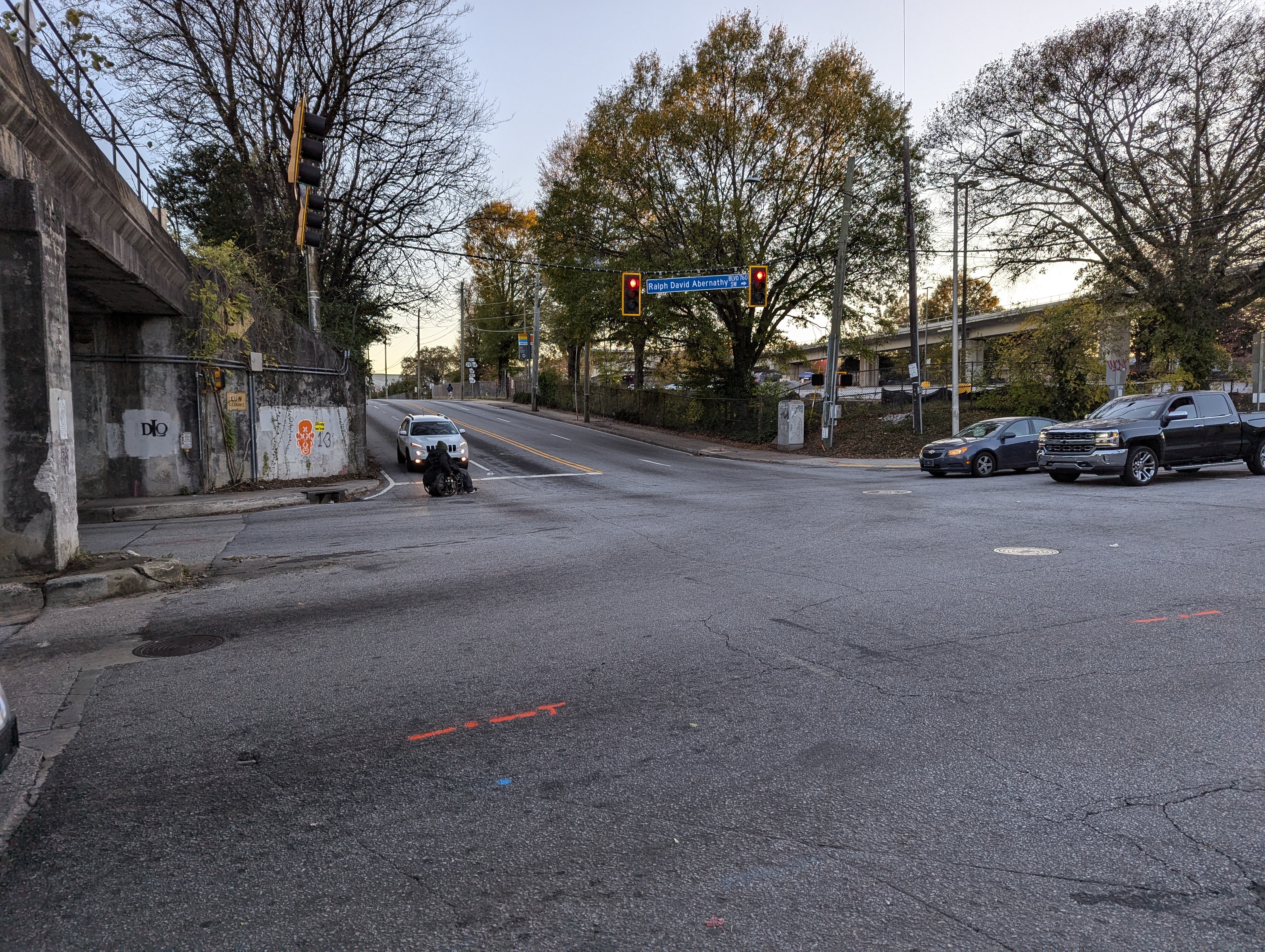
At the next Atlanta Streets Alive on Sunday, May 31st, you’ll have the chance to think about the street’s history and where it can go from here.
Abernathy, named in honor of Civil Rights activist Ralph David Abernathy, is home to historic neighborhoods, schools, cultural institutions, local businesses, and places of faith in Southwest Atlanta. It serves the high-ridership MARTA bus route #71 Cascade, but it’s also part of the city’s High-Injury Network — a group of relatively few streets that account for most traffic fatalities and serious injuries in the City.
Because Abernathy Blvd. fluctuates between being part of the state route network and a City-owned street, there are multiple projects in various stages to improve it.
The Georgia Department of Transportation (GDOT) repaved Abernathy not too long ago, leaving the old configuration in place. Utility covers weren’t replaced and some grates were installed parallel, creating hazards for people outside of cars, even as car traffic was able to move more quickly due to the smoother pavement. (According to the National Highway Traffic Safety Administration [NHTSA], speeding is a primary factor in about one-third of all traffic fatalities nationwide.)
However! GDOT also has a funded safety project that will improve the corridor for people outside of cars. It’s one of two projects planned for the Abernathy Blvd.
What’s happening next

There are two projects planned for the corridor:
1. GDOT multimodal safety project (purple)
West of Metropolitan Parkway, Abernathy Blvd. is a state route.
GDOT is in the beginning stages of project development. The project consists of “…updating approximately 1.3 miles State Road (SR) 139/Ralph David Abernathy Boulevard from the Kroger City Center and Atlanta Beltline Westside Trail on the west with the West End Mall and MARTA transit station on the east. The proposed project will reduce four (4) lanes, two (2) in each direction, to three (3) lanes, one (1) lane in each direction with a raised median/two way turn lane, and a bicycle lane on each side. Signalized intersections will be upgraded and new left turn phases added for select SR 139 approaches, leading pedestrian intervals for all walk phases, and several Rectangular Rapid Flashing Beacons (RRFBs) are to be installed along the SR 139 corridor.”
See project details on GDOT's website and stay tuned for opportunities to weigh in.
2. City of Atlanta safe streets project (blue): 2 segments
East of Metropolitan, Abernathy is an Atlanta city street.
The Atlanta Department of Transportation has a "safe streets" project funded by Moving Atlanta Forward that includes “...installation of on-street protected bike lane and other safety improvements where feasible ( e.g. ADA improvements, vertical lane delineators/safe crossing treatments, lane narrowing, etc.). This project will support the Lee Street Trail and McDaniel Safe Street projects by providing east-west connectivity. Phase 1: Safety improvements from W Whitehall St to Metropolitan Pkwy Phase 2: Installation of bike lane and other safety Improvements.”
See project details on ATLDOT's website.
Why these projects are needed
- Safety
- Racial disparities in who is most affected by unsafe streets
- Access
Safety: The City of Atlanta has committed to eliminating serious injury and fatal crashes by 2040. Engineering safer streets is the most effective way to prevent crashes and save lives.
Racial disparities: There have been four people killed while biking in the City of Atlanta in the last two years. All were Black, according to the ATLDOT. A look at one year of pedestrian fatalities (2021) found that nearly 80% of those killed or seriously injured in the City were Black, yet Black or African American residents make up just 46% of the population.

Access: The West End has a high percentage of non-drivers, including people who rely on transit, walking or using wheelchairs, biking, or scooting to get around. Streets like Abernathy must be designed to serve all transportation needs, including but not limited to those of people who own cars.