

Atlanta, you did it! You turned out to vote in November. Now let's do it again!
Two City Council districts, D7 and D11, as well as Atlanta Public School Board of Education seats, are going to a runoff on Tuesday, December 2nd!
Local government runoffs are typically very low turnout, so your vote matters more than ever! Please show up and tell your family and friends.
Runoffs
- Atlanta City Council District 7: Thad Flowers v Thomas Worthy
- Atlanta City Council District 11: Nate Jester v Wayne Martin
- Atlanta Board of Education District 2: Marlissa Crawford v Tony Mitchell
- Atlanta Board of Education District 6: Patreece Hutcherson v Tolton Pace
- Atlanta Board of Education Seat 8 At-Large: Kacyee Brock v. Royce Mann
Get ready
Watch our City Council forums
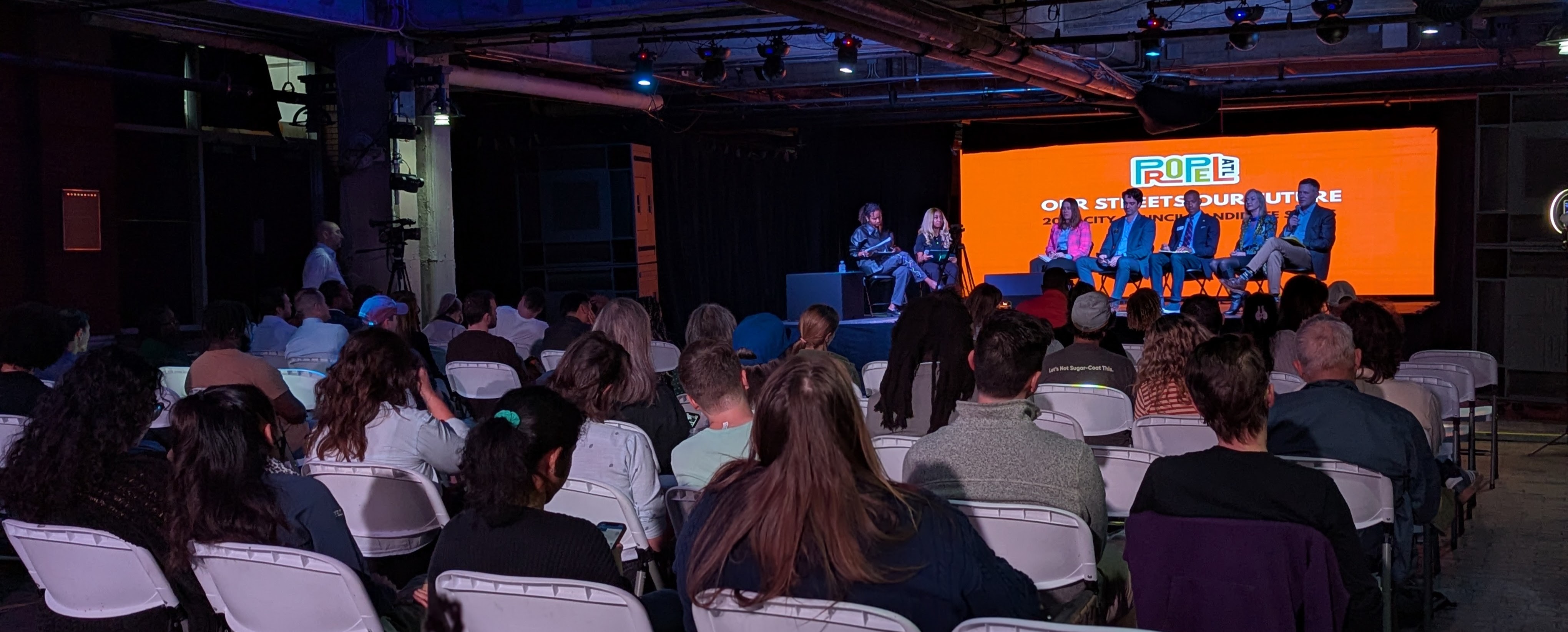
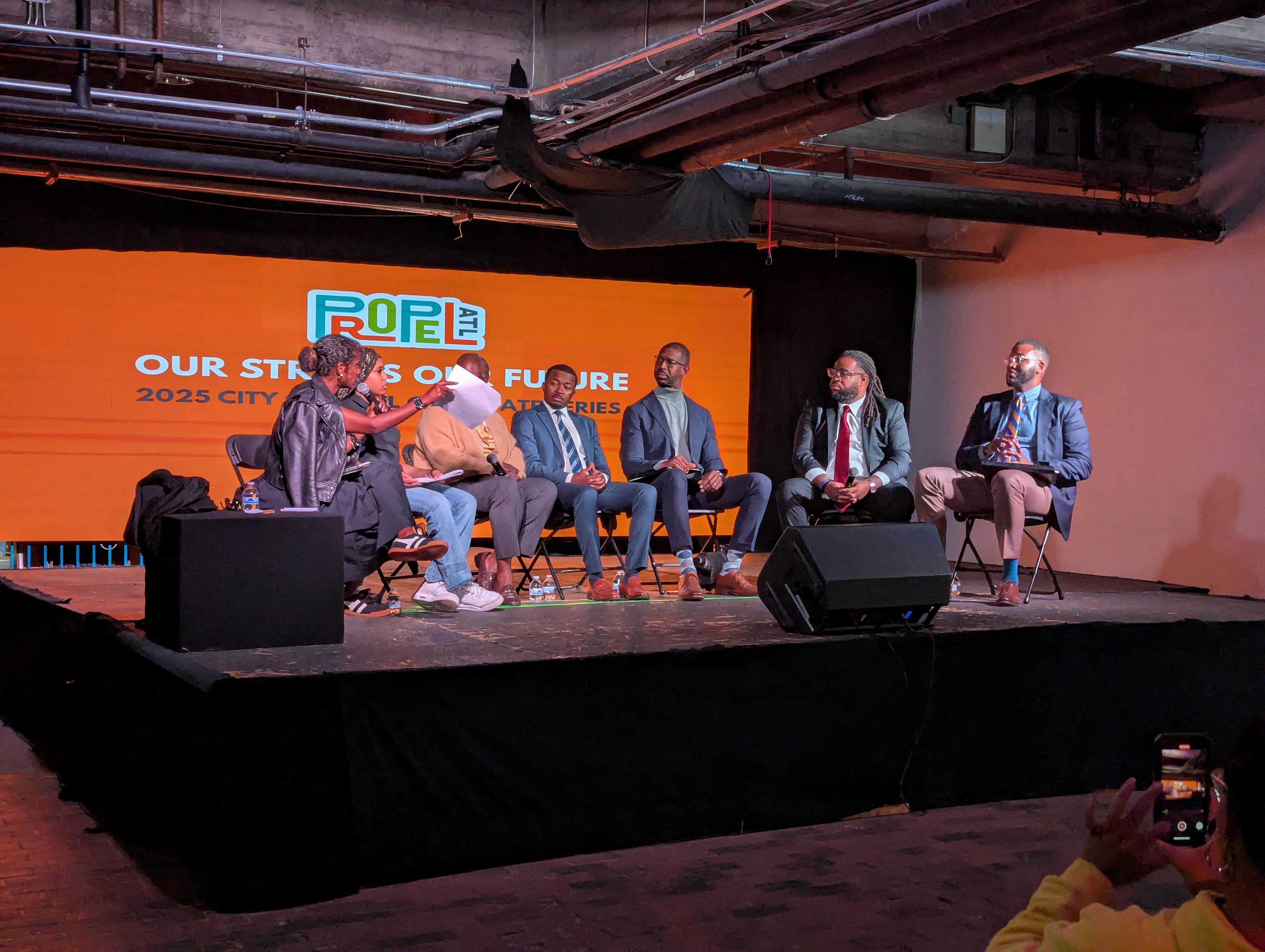
Read more: Atlanta Civic Circle on Atlanta City Council runoffs: knocked-out District 7 and 11 challengers make endorsements
Check out how the candidates responded to the Atlanta Civic Circle’s questionnaire, with transportation and mobility questions excerpted below:
District 7
THAD FLOWERS
Q: How would you help advance the city of Atlanta's goal to eliminate traffic fatalities by 2040 (Vision Zero)? What will you do if the Vision Zero program is not adequately funded in the next city operating budget?
A: Atlanta’s goal to eliminate traffic fatalities by 2040 is achievable if we make safety a core part of how we design and deliver projects. As Chief of Staff for the Atlanta City Council, I helped pass the city’s Vision Zero legislation, which set a clear framework for safer streets. In my current role supporting transportation and infrastructure projects, I see firsthand the engineering and delivery challenges of incorporating safety into every design. That experience allows me to connect policy with practical implementation.
I'm for a Safe System approach that prioritizes speed management, improved crossings, and protected infrastructure for people walking, biking, and using transit. I will back speed management and intersection safety already approved by Council, including the no-turn-on-red rollout in Downtown, Midtown, and Castleberry Hill, with clear timelines and public reporting.
In District 7, that includes advancing the Lenox Road Safe Street and PATH400 connections to calm speeds, add a multiuse path, and improve crossings. I will also align Renew Atlanta and TSPLOST funds with Vision Zero objectives, ensuring every resurfacing or signal project includes safety improvements.
By focusing on data, transparency, and community collaboration, we can make every trip in Atlanta safer and bring the city closer to a true Vision Zero future.
Q: Los Angeles voters approved Measure HLA, which requires the city to install pre-planned bus, bike, and walk improvements from its mobility plan as it repaves streets. What is your position on adopting a similar ordinance in Atlanta?
A: I support the idea behind Measure HLA and believe a similar approach could work well in Atlanta. When we repave streets, we should use that opportunity to make them safer and more efficient for everyone who walks, bikes, rides transit, or drives. The city already has strong plans in place through ATLDOT’s Complete Streets Design Guide and Vision Zero Action Plan, but too often, implementation depends on timing, funding, or politics.
Q: Traffic calming is one of the most requested safety improvements in Atlanta, yet ATLDOT has not activated the $10 million already allocated from Moving Atlanta Forward. How would you ensure these dollars are delivered on time and transparently? How should traffic-calming projects be selected and prioritized?
A: I know how projects can stall between funding and delivery. In my current role managing infrastructure projects, I understand the operational challenges that delay results and how to fix them.
Traffic-calming projects should be prioritized based on impact, safety data, and community need. Locations near schools, parks, senior centers, and transit stops should rise to the top, along with corridors that have a record of crashes, speeding, or high pedestrian activity. Equity must also guide decisions so neighborhoods that have waited the longest for investment are not left behind.
Council currently receives clear timelines, published project lists, and quarterly progress updates, but adherence to those timelines and consistent follow-up are lacking. ATLDOT should prioritize the backlog of approved applications, bundle smaller projects for faster delivery, and use a standardized design toolkit so installations do not have to start from scratch each time. Council must remain diligent in holding the department accountable for steady progress between updates.
Transparency builds trust. When residents see visible improvements such as speed tables, curb extensions, signage, and striping, they gain confidence that city programs are working. I will ensure the $10 million is used efficiently, equitably, and with full accountability to the communities that requested these upgrades.
Q: Data shows that Black, low-income, and immigrant communities are disproportionately harmed by unsafe streets. Yet safety projects sometimes face pushback over concerns about traffic congestion or parking. How would you ensure safety improvements are implemented equitably across the city, and what would you do when these projects face pushback over traffic or parking concerns?
A: Safety improvements must be implemented equitably, guided by both data and community input. Every neighborhood deserves safe, walkable streets, not just those with the most influence or new investment. Equity means directing resources to areas with the highest crash rates, limited infrastructure, and the greatest number of people walking, biking, or using transit.
I’ve helped advance policies that made safety a priority in transportation planning. In my current work supporting infrastructure projects, I see how coordination and communication shape successful delivery. The city must apply consistent criteria, share clear timelines, and communicate openly with residents about why a project is needed and how it improves safety.
When projects face pushback over traffic or parking, I believe in listening, adjusting design where feasible, and explaining the long-term safety and accessibility benefits. Equitable implementation means every community receives the same commitment to safer, people-centered streets that save lives.
Q: Many Atlanta sidewalks are cracked, obstructed, or missing altogether, creating daily barriers for seniors, parents with strollers, and people with disabilities. How would you address the inequity of unsafe and non-ADA (Americans with Disabilities Act) compliant sidewalks across our city?
A: Sidewalks across Atlanta are in poor condition, and in many areas they were never built at all. That gap is partly the result of historic decisions not to require sidewalks, leaving entire neighborhoods without safe or accessible routes for people walking, using mobility devices, or reaching transit.
Sidewalk development now needs to be codified as a core part of city infrastructure. I support requiring sidewalks in all new development and major street projects while improving how we fund and deliver repairs. The city’s current sidewalk funding is too limited and inconsistent. We should create a dedicated, reliable funding source, align Renew Atlanta and TSPLOST dollars with clear priorities, and make annual progress reports public.
Q: Do you support adding transit on the BeltLine? If so, what mode (Light Rail Transit, Bus Rapid Transit, or other), and what routes would you prioritize, and what actions would you take as a city council member to make your vision happen?
A: I support adding transit on the BeltLine. As originally envisioned, a complete BeltLine must move people as well as connect neighborhoods, giving residents a real alternative to driving. I favor light rail where feasible and bus rapid transit where it can be delivered faster and more cost-effectively.
Priority should go to the southside corridors, linking MARTA stations at West End, Bankhead, and District 7’s Lindbergh, and serving neighborhoods that rely most on public transit.
During my time working for the Atlanta City Council, I helped advance multimodal transportation policy. In my current role supporting transportation projects, I understand the engineering, funding, and coordination required to make BeltLine transit successful.
As a Councilmember, I will work to align city funding, MARTA’s capital plan, and BeltLine design to deliver equitable, connected, and community-centered transit for all Atlantans.
THOMAS WORTHY
Q: How would you help advance the city of Atlanta's goal to eliminate traffic fatalities by 2040 (Vision Zero)? What will you do if the Vision Zero program is not adequately funded in the next city operating budget?
A: Eliminating traffic fatalities by 2040 requires urgency, funding, and coordination. Atlanta’s streets must work for everyone—drivers, cyclists, pedestrians, and transit riders alike. I’ll fight to fully fund and accelerate the Vision Zero program, ensuring we focus on high-injury corridors first. That means more traffic-calming infrastructure, safer intersections, and complete sidewalks, especially near schools, parks, and senior housing.
At the same time, we must address the root causes of everyday danger and frustration on our roads: congestion, unsafe speeds, and poor traffic flow. I’ll prioritize synchronizing traffic lights along key corridors like Peachtree, Piedmont, Roswell, Lenox and Wieuca (which will require coordinated collaboration with the State because some of these are state routes); enforce loading and delivery zone rules so lanes stay clear during peak hours; and get the “pothole posse” back to work, ensuring road repairs are fast and durable. These aren’t cosmetic fixes, they’re foundational to safety and mobility.
If the Vision Zero program is not adequately funded, I’ll work to reallocate transportation dollars, leverage federal safety grants, and explore Special Service Districts to supplement resources. So residents can see progress in real time, I’ll also advocate for transparency, such as publishing data on crashes, project timelines, and outcomes.
A safer Atlanta means better-managed streets, calmer traffic, and infrastructure that reflects the value we place on human life. I’ll bring my experience from MARTA and a decade of public policy experience to ensure we build a city where everyone can get where they’re going safely and efficiently.
Q: Los Angeles voters approved Measure HLA, which requires the city to install pre-planned bus, bike, and walk improvements from its mobility plan as it repaves streets. What is your position on adopting a similar ordinance in Atlanta?
A: I support adopting an ordinance similar to Los Angeles’s Measure HLA, requiring that planned mobility improvements be built when roads are repaved. It’s common sense: when we open a street, we should fix it right the first time. This approach would accelerate implementation of Atlanta’s Complete Streets and TrailsATL plans without new bureaucracy, improving safety, walkability, and connectivity across the city. I also strongly support initiatives such as Signature Streets, that are being put forward by a lot of neighborhood associations in District 7 and would do everything in my power on Council to help see them to fruition.
Q: Traffic calming is one of the most requested safety improvements in Atlanta, yet ATLDOT has not activated the $10 million already allocated from Moving Atlanta Forward. How would you ensure these dollars are delivered on time and transparently? How should traffic-calming projects be selected and prioritized?
A: Every neighborhood deserves safer, calmer streets. Atlanta has already set aside $10 million for traffic calming, yet too little of it has reached neighborhoods. As a City Council member, I’ll make sure those funds are activated quickly, transparently, and equitably.
I’ll push the Department of Transportation to publish a public-facing project dashboard showing where traffic-calming projects stand, from design through construction. Residents should be able to see exactly how their tax dollars are being spent.
Traffic calming is about designing streets for people, not just cars. I’ll work to synchronize traffic lights along major corridors, enforce loading and delivery zone rules to keep lanes clear during rush hour, and repair potholes and broken sidewalks promptly. I’ll also champion neighborhood-driven prioritization, using crash and speed data to target the most dangerous areas first.
Safe streets require both urgency and accountability. As MARTA Chair, I proved that disciplined management and clear goals can deliver results. I’ll bring that same approach to City Hall by turning traffic dollars into visible improvements, restoring public trust, and making Atlanta’s streets safer, smoother, and more predictable for everyone.
Q: Data shows that Black, low-income, and immigrant communities are disproportionately harmed by unsafe streets. Yet safety projects sometimes face pushback over concerns about traffic congestion or parking. How would you ensure safety improvements are implemented equitably across the city, and what would you do when these projects face pushback over traffic or parking concerns?
A: When safety projects face pushback, I’ll lead with facts and fairness. Data shows that Black, low-income, and immigrant communities are disproportionately affected by unsafe streets. We must implement improvements equitably, even when congestion or parking concerns arise. That means engaging residents early, explaining benefits clearly, and ensuring that the value of a saved life outweighs the inconvenience of a lost parking space. All of this must be done with unwavering transparency, honesty, accountability, and authenticity.
Q: Many Atlanta sidewalks are cracked, obstructed, or missing altogether, creating daily barriers for seniors, parents with strollers, and people with disabilities. How would you address the inequity of unsafe and non-ADA (Americans with Disabilities Act) compliant sidewalks across our city?
A: Atlanta’s sidewalk system is unacceptable. I’ll advocate for a dedicated, recurring sidewalk fund, expanded use of impact fees, and a transparent repair schedule published online. We must prioritize ADA compliance and Safe Routes to School programs first. We must also support innovative programs in residential neighborhoods such as Signature Streets. Sidewalks are basic infrastructure, connecting people to jobs, transit, and each other.
Q: Do you support adding transit on the BeltLine? If so, what mode (Light Rail Transit, Bus Rapid Transit, or other), and what routes would you prioritize, and what actions would you take as a city council member to make your vision happen?
A: Council must work in close partnership with MARTA to accelerate high-impact transit investments that improve connectivity and expand access. That means prioritizing the construction of four new infill rail stations linking the BeltLine to MARTA’s heavy rail in all four quadrants of the city, strengthening east–west connections, and fast-tracking bus rapid transit and trail-to-transit improvements.
As a former MARTA Board Chair who helped negotiate historic labor agreements and secure a AAA bond rating, I bring direct experience in advancing complex transportation projects responsibly. I support making the BeltLine stronger as both a trail and a true transportation alternative by connecting it to MARTA through reliable feeder service and innovative, lower-cost transit modes that can serve the loop more efficiently.
To make these projects a reality, Council should explore Special Service Districts, pursue federal infrastructure grants, and partner with employers and neighborhoods to expand local transit access. Atlanta’s future depends on smart, sustainable mobility, and I’ll bring the expertise to help deliver it.
District 11
Wayne Martin
Q: How would you help advance the city of Atlanta's goal to eliminate traffic fatalities by 2040 (Vision Zero)? What will you do if the Vision Zero program is not adequately funded in the next city operating budget?
A: Vision Zero must become a priority, especially the equity framework, focusing on low-income and communities of color. I will work with both the tranportation and finance committees to develop funding strategies to ensure the initiative has every resource to be full implemented.
Q: Los Angeles voters approved Measure HLA, which requires the city to install pre-planned bus, bike, and walk improvements from its mobility plan as it repaves streets. What is your position on adopting a similar ordinance in Atlanta?
A: I think this is smart transit-infrastructure policy, and I would like to see a feasibility study conducted to determine the proper pathways to implement a similar ordinance in Atlanta.
Q: Traffic calming is one of the most requested safety improvements in Atlanta, yet ATLDOT has not activated the $10 million already allocated from Moving Atlanta Forward. How would you ensure these dollars are delivered on time and transparently? How should traffic-calming projects be selected and prioritized?
A: I would like to see a full analysis conducted of traffic accidents and citations related to speed, where areas with incidences involving fatalities be prioritized. A public-facing dashboard should be enacted that allows projects to be tracked in real-time, with regular updates being provided at the transportation committee meetings.
Q: Data shows that Black, low-income, and immigrant communities are disproportionately harmed by unsafe streets. Yet safety projects sometimes face pushback over concerns about traffic congestion or parking. How would you ensure safety improvements are implemented equitably across the city, and what would you do when these projects face pushback over traffic or parking concerns?
A: I believe safety projects face pushback due to lack of public engagement with residents. I think there's a lot of opportunity to educate residents about the projects and the causational factors driving the need. I would like to see a robust public information campaign, involving direct mail, social media, tv and radio be implemented to address the issue of low public engagement.
Q: Many Atlanta sidewalks are cracked, obstructed, or missing altogether, creating daily barriers for seniors, parents with strollers, and people with disabilities. How would you address the inequity of unsafe and non-ADA (Americans with Disabilities Act) compliant sidewalks across our city?
A: I would like to see a citywide sidewalk assessment be conducted to determine a priority list for each district to get repairs.
Q: Do you support adding transit on the BeltLine? If so, what mode (Light Rail Transit, Bus Rapid Transit, or other), and what routes would you prioritize, and what actions would you take as a city council member to make your vision happen?
A: I believe the BeltLine tranist plan should be driven by current residents living within proximity. For example., light rail may be the right mode for the Eastside trail, but BRT for the Campbellton Corridor.
Nate Jester
Q: How would you help advance the city of Atlanta's goal to eliminate traffic fatalities by 2040 (Vision Zero)? What will you do if the Vision Zero program is not adequately funded in the next city operating budget?
A: Our Vision Zero goal is urgent. Every life lost on our streets is one too many. We can make progress by focusing on safer street design, data-driven investments, and community partnerships that prioritize people.
That includes expanding protected crosswalks, improving lighting, and using tactical urbanism (low-cost, community-led measures like painted curb extensions or temporary barriers) to test what works before committing major funds. These small steps can deliver quick wins and inform long-term improvements.
If Vision Zero isn’t adequately funded, I’ll use the budget process to press for reallocation of transportation dollars toward safety projects. The budget is how we can turn good ideas into action and hold ourselves accountable.
Public safety includes how we move through our city, and every neighborhood deserves streets that are safe, walkable, and designed for everyone.
Q: Los Angeles voters approved Measure HLA, which requires the city to install pre-planned bus, bike, and walk improvements from its mobility plan as it repaves streets. What is your position on adopting a similar ordinance in Atlanta?
A: I support the principle behind Los Angeles’ Measure HLA: when we repave a street, we should take the opportunity to build safety and accessibility in. A similar approach here could make our investments more efficient and equitable. If we coordinate resurfacing with our mobility and safety goals, we can create safer corridors for everyone, including drivers, cyclists, transit riders, and pedestrians, without adding significant cost.
My focus would be on implementation and equity: ensuring improvements are distributed fairly across neighborhoods, especially in parts of Southwest Atlanta that have been overlooked. I’d also focus on using the budget process to ensure these projects are prioritized and coordinated across departments. Integrating mobility upgrades with regular maintenance is a smart, transparent way to make our streets safer and more connected.
Q: Traffic calming is one of the most requested safety improvements in Atlanta, yet ATLDOT has not activated the $10 million already allocated from Moving Atlanta Forward. How would you ensure these dollars are delivered on time and transparently? How should traffic-calming projects be selected and prioritized?
A: Traffic calming is one of the most effective ways to save lives and make our neighborhoods safer. I’d push for the $10 million already allocated to move from plans to pavement. As a councilmember, I’d press for clear public reporting on infrastructure funding and traffic-calming requests: where it stands, how projects are ranked, and when they’ll be delivered. Transparency builds trust and helps residents see progress in real time. I’d also work with ATLDOT to set measurable timelines and include regular updates in quarterly transportation reports to Council.
Transparency starts with leadership. On my campaign, I’ve committed to open office hours, town halls, and consistent communication with residents, and I’ll deliver on those commitments while in City Hall. Projects should be prioritized by data and equity, including crash history, traffic volume, and proximity to schools, transit, and senior housing. I’m focused on Southwest Atlanta receiving its fair share of safety investments.
Q: Data shows that Black, low-income, and immigrant communities are disproportionately harmed by unsafe streets. Yet safety projects sometimes face pushback over concerns about traffic congestion or parking. How would you ensure safety improvements are implemented equitably across the city, and what would you do when these projects face pushback over traffic or parking concerns?
A: My focus will be on saving lives. Everyone deserves to get home safely no matter their zip code, income, or background. Research shows that communities like Southwest Atlanta face higher risks from unsafe streets, which makes equitable investment in safety a moral obligation, not just a planning goal.
To mitigate pushback on safety projects, I believe in starting early and explaining the why behind changes before any cones hit the ground. People are more likely to support improvements when they understand and believe in the goal: preventing injuries and deaths for our neighbors, friends, and families.
I’d also push for equity mapping—using crash data, income levels, transit access, and demographics to clearly identify where the need is greatest and track whether investments are being distributed fairly. Transparency and data should guide every dollar we spend.
One of my priorities will be securing more funding for infrastructure and safety improvements in District 11, where too many residents still walk along unsafe roads or wait at bus stops without basic protection.
Q: Many Atlanta sidewalks are cracked, obstructed, or missing altogether, creating daily barriers for seniors, parents with strollers, and people with disabilities. How would you address the inequity of unsafe and non-ADA (Americans with Disabilities Act) compliant sidewalks across our city?
A: I grew up in District 11, and I’ve walked to the bus stop and to school along roads that didn’t have sidewalks then and still don’t today. When I’m knocking on doors, I hear about sidewalks constantly from seniors, parents, and neighbors who just want to walk safely to the bus stop, the park, or the store.
My focus would be on equity, accessibility, and accountability. We should use equity mapping (combining ADA data, pedestrian crash history, and income levels) to identify where needs are greatest and direct funding accordingly. I’ll prioritize communities like Southwest Atlanta, where sidewalks are often cracked, missing, or obstructed.
I’d also push for a dedicated sidewalk maintenance and repair fund within the city budget, with clear public reporting so residents can track progress. Sidewalks connect people and neighborhoods, and investing in them is how we make our communities safer, more welcoming, and accessible for everyone.
Q: Do you support adding transit on the BeltLine? If so, what mode (Light Rail Transit, Bus Rapid Transit, or other), and what routes would you prioritize, and what actions would you take as a city council member to make your vision happen?
A: Yes, I support adding rail transit on the BeltLine. That’s what Atlanta voters were promised when the project was first approved, and we deserve a City that keeps promises.
My vision is for light rail. I grew up riding MARTA, taking the bus and the train to work and school. I think rail moves more people efficiently, reduces congestion, and prepares us for the population growth that Atlanta is projected to experience, but I'm focused on results. This project is about more than transit. It’s about equity and connection. The BeltLine is a way to heal a city that was divided by policies rooted in segregation and prejudice. Transit along the BeltLine corridor can physically and economically reconnect neighborhoods that were cut off from opportunity.