

Most of Atlanta’s streets aren’t built around people – they’re designed for cars. Spending a lot of money just to patch them up is the wrong move for the World Cup, and it’s the wrong move for Atlanta. That's why we're calling for a different approach to preparations for the 2026 World Cup games in Atlanta. One that puts people – visitors and everyday Atlantans – first.
Atlanta will play host to the biggest-ever World Cup in 2026. That means an estimated 300,000 unique visitors for Atlanta.
Travelers to a massive event like this will expect convenient options like transit, walking, and shared e-scooters and bikes to get around the city. But Atlanta’s current plans focus mostly on resurfacing streets.
Atlanta Mayor Andre Dickens’s administration has asked Atlanta City Council to approve a lot of additional money – $120 Million – mostly to “resurface” streets, making superficial repairs to the pavement to make roads smoother for drivers. Just 4% of the funding would go towards sidewalks and ADA ramps. That amount of money doesn’t go far. This, in a city repeatedly sued for violations of the Americans With Disabilities Act (ADA).
What’s more, we’re told there are no plans to include safe spaces for people to bike or scoot, despite the many projects planned.
Atlanta has a large backlog of planned projects that haven’t been delivered, didn’t increase the Atlanta Department of Transportation’s budget this year, and recently parted ways with its Deputy Director for Capital Projects. Plus, the legislation sent to the City Council didn’t even include a project list, just buckets of money.
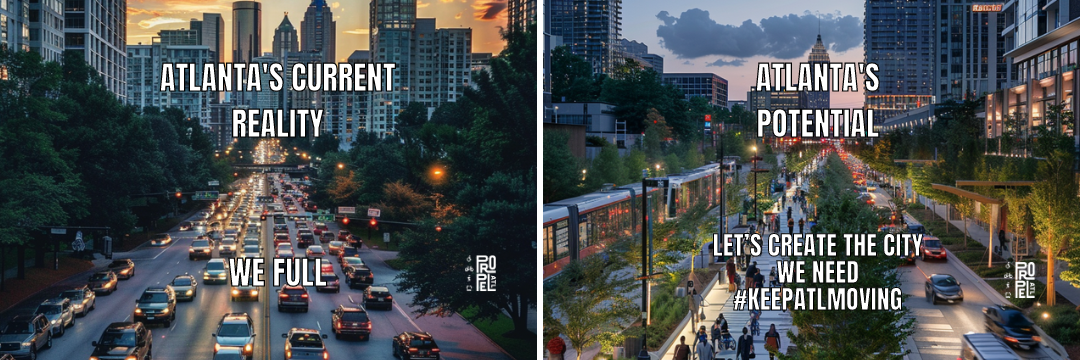
Most of Atlanta’s streets today aren’t built around people – they’re designed for cars. Spending a lot of money just to patch them up is the wrong move for the World Cup, and it’s the wrong move for Atlanta.
If the City doesn’t provide more sustainable ways of getting around, adding 300,000 cars to our streets will grind the city to a halt.
There is another way. Atlanta benefits greatly from having a direct MARTA train connecting the airport to downtown. By promoting transit and investing in making it safe and simple to walk, bike, or scoot, we can make the World Cup a good experience for our guests and our city more accessible to the rest of us.
Take action today

*according to a study for the Metro Atlanta Chamber of Commerce