
As the city gears up for the World Cup and other big events, there are several curb-level programs overdue for updates and changes. These include “micromobility” (aka rental scooters, bikes, and e-bikes) and street parking.
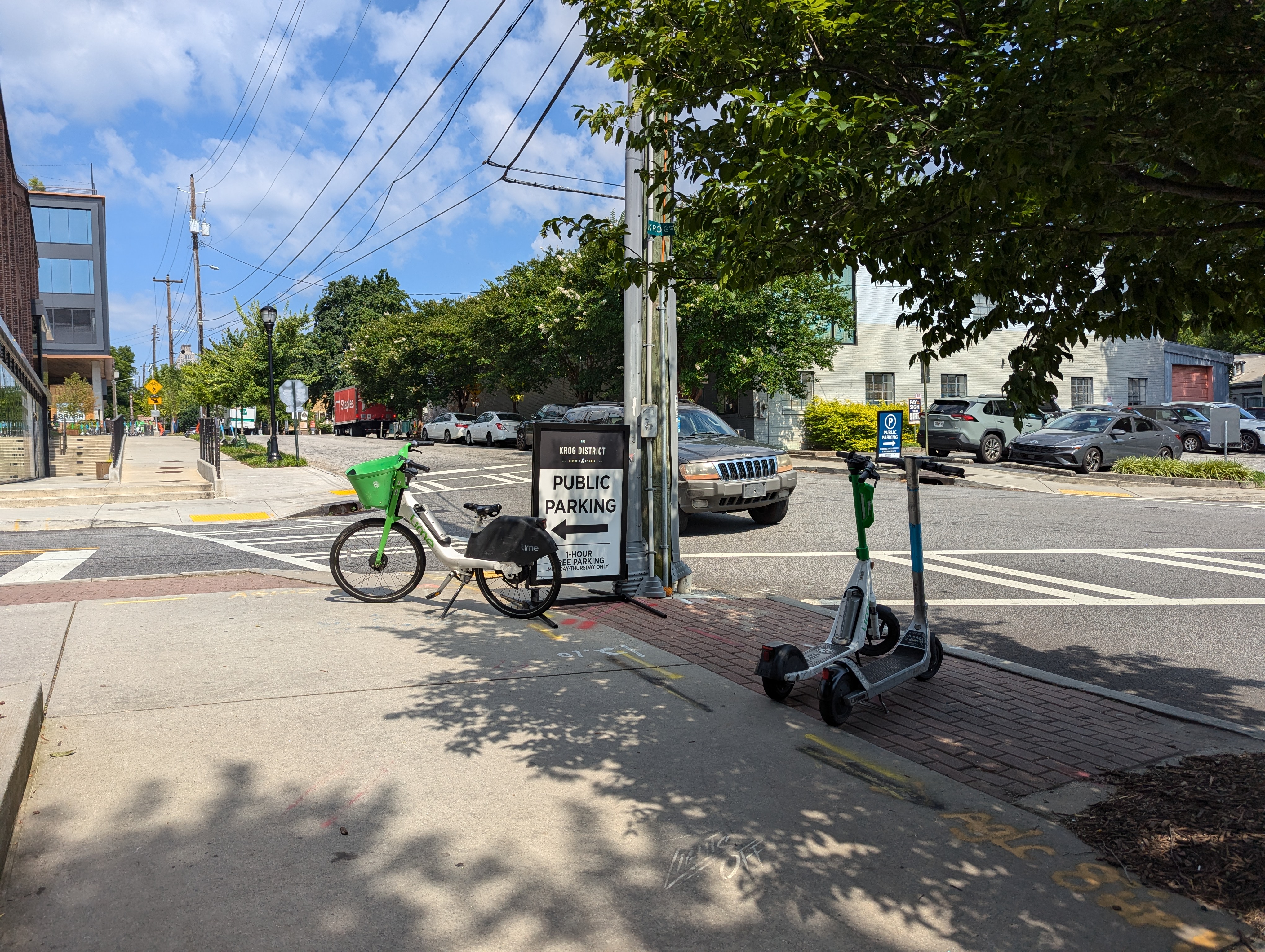
For these reasons, Atlanta City Council recently convened to discuss the future of on-street parking and curbside management, addressing everything from freight delivery zones and residential permits to new technology and how to enforce laws and rules fairly. The meeting brought together key council members, Atlanta Department of Transportation (ATLDOT) officials, community advocates, and transportation stakeholders to outline a more comprehensive and equitable curb management strategy for the city.
The Urban Curb: A Finite and Valuable Resource
Echoing parking guru Donald Shoup, John Bailey of the Natural Resource Defense Council recently emphasized that “the urban curb is a limited resource,” one that must be managed carefully to balance multiple, often competing, needs:
-
Passenger and freight access
-
Active travel (walking, cycling)
-
Stormwater infrastructure
-
Public space use
-
Traditional on-street parking
He advocated for data-driven strategies such as pricing models (like San Francisco’s SFpark), smart loading zones, and flex zones that adapt to time-of-day needs. Bailey also proposed Parking Benefit Districts, which would redirect parking revenue into neighborhood improvements.
ATLDOT Lays Out the Vision
ATLDOT detailed the city’s ongoing curb management program. Key takeaways included:
-
Goals: Improve safety, leverage smart tech, and develop a lasting policy framework for curbside use.
-
A fee study is currently underway to evaluate and potentially adjust on-street parking rates. Completion is expected by September.
-
The city aims to release an RFP (Request for Proposals) by the end of this year to invite innovative solutions from curb management companies.
-
The Comprehensive Transportation Plan (CTP) — an 18-month process targeting early 2027 completion — will formalize regulations and priorities.
Programs under review include:
-
Residential Parking Permits
-
Valet Parking
-
Public On-Street Parking
-
Park/Temporary for-hire parking
-
Micro-Mobility Integration (e-scooters, bikes, etc.)
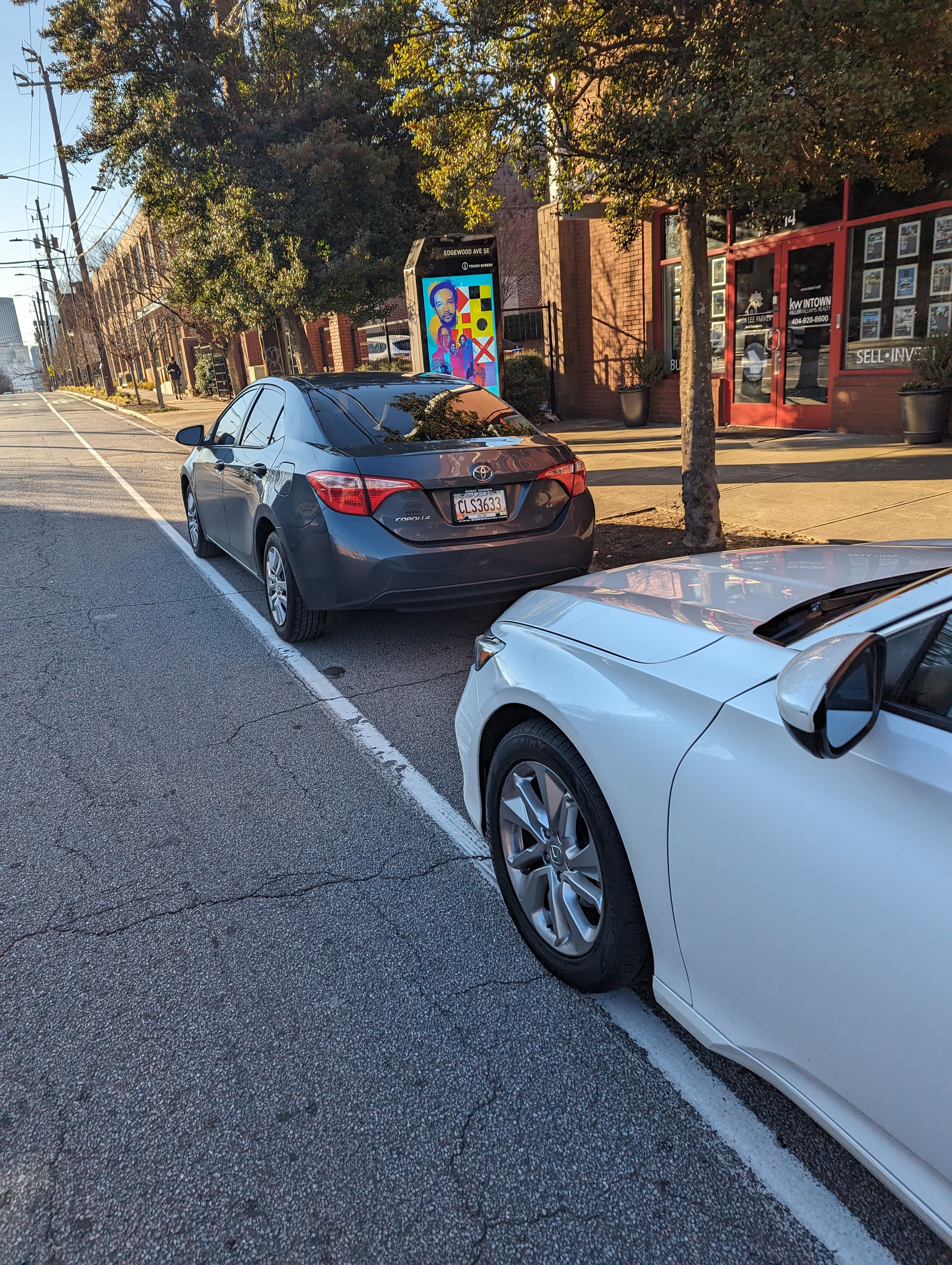
Cars parked in an unprotected bike lane. Photo: Propel ATL
What’s Next for Atlanta’s Curb?
As ATLDOT and City Council members continue to wrestle with enforcement, equity, and funding, the broader message is clear: Atlanta's curb space must evolve. With smart management, equitable enforcement, and resident-focused design, the city can transform its streets into safer, more functional, and more inclusive spaces.
The coming months — especially the fall fee study results and 2025 RFP release — will shape the next chapter of Atlanta’s parking and mobility landscape.
-
 Jeremiah Jones published this page in News 2025-08-08 16:08:48 -0400